Surgical Risks - What's Happening Under the Surface
1. Blood Supply Problems (One of the Most Important Risks)
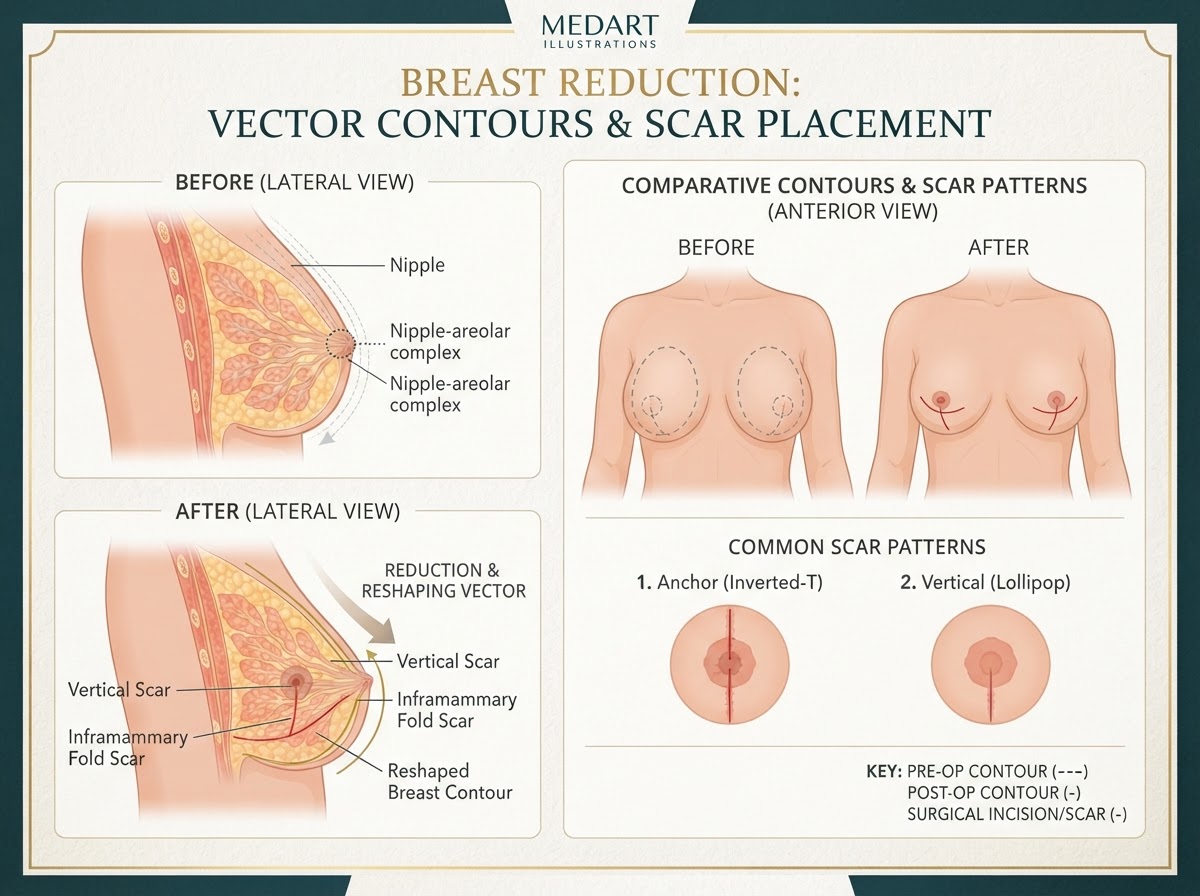
During breast reduction, tissue is removed and the nipple is usually left attached to a "pedicle" (a stalk of tissue with blood vessels).
If blood flow is reduced -> ischemia (lack of oxygen)
Worst case -> tissue necrosis (tissue death)
What this affects:
- Nipple/areola survival
- Skin healing
Risk factors:
- Smoking (biggest one)
- Very large reductions
- Poor circulation (e.g., Diabetes)
How often?
- Minor healing issues: ~5-15%
- Full nipple loss: rare (<1%)
2. Nerve Damage & Sensation Changes
Nerves supplying the nipple are stretched or cut during surgery.
Outcomes:
- Temporary numbness (common)
- Hypersensitivity (can feel "electric" or painful)
- Permanent loss of sensation (less common)
Why it matters:
- Sensation is tied to sexual function and body awareness
Likelihood:
- Temporary changes: very common
- Permanent loss: ~5-10%
3. Scarring - More Than Just Cosmetic
Breast reduction scars are typically:
- Around the nipple (periareolar)
- Vertical down the breast
- Along the crease (anchor shape)
Complications:
- Thick or raised scars (hypertrophic)
- Overgrowth beyond incision (keloids)
Higher risk if you:
- Are younger
- Have darker skin tones (genetic tendency to keloids)
Important note: Scars are permanent, but usually fade significantly over 12-18 months.
4. Wound Healing Problems
Tension on the skin (especially at the "T-junction" under the breast) can cause:
- Wounds reopening (dehiscence)
- Slow healing
- Minor tissue breakdown
Why this area?
- It's where multiple incision lines meet -> highest stress point
Risk increases with:
- Smoking
- Larger breast size
- Infection
5. Fat Necrosis (Often Misunderstood)
This happens when fat tissue doesn't get enough blood supply.
What you might notice:
- Firm lumps inside the breast
- Sometimes tender
Important:
- Benign (not cancer)
- But may need scans to confirm
6. Breastfeeding Impact
This depends heavily on technique.
If milk ducts and nerves are preserved -> breastfeeding may still be possible If significantly disrupted -> reduced or no milk production
Reality:
- Many patients can breastfeed partially, but not always fully
7. Asymmetry & Aesthetic Outcomes
No surgeon can make perfectly identical breasts.
Possible issues:
- Size differences
- Nipple height mismatch
- Shape irregularities
Sometimes revision surgery is done to refine results.
8. Anaesthesia & Systemic Risks
These are rare but important:
- Reactions to anaesthesia
- Blood clots (DVT -> pulmonary embolism)
- Chest complications
Risk is higher if:
- You're inactive after surgery
- You have clotting disorders
- You smoke or take estrogen-containing meds
Risk by Numbers (Approximate Reality Check)
- Minor wound issues: 5-15%
- Infection: 1-5%
- Hematoma (bleeding): 1-5%
- Fat necrosis: 1-10%
- Permanent nipple sensation loss: 5-10%
- Nipple loss: <1%
Psychological & Lifestyle Considerations
Often overlooked but important:
Positive outcomes (very common):
- Relief from chronic pain
- Improved posture
- Easier exercise
- Better clothing fit
Potential downsides:
- Adjustment to new body image
- Unrealistic expectations -> dissatisfaction
- Emotional impact if complications occur
The Smoking Factor (Worth Emphasizing)
If there's one thing that dramatically increases risk, it's smoking.
Nicotine:
- Constricts blood vessels
- Reduces oxygen delivery
- Impairs healing
Many surgeons require stopping 4-6 weeks before and after surgery.
What Reduces Your Risk Most
- Choose a board-certified plastic surgeon
- Follow all pre-op instructions
- Stop smoking completely
- Maintain stable weight
- Manage conditions like Diabetes
Bottom Line
Breast reduction is considered a high-satisfaction surgery with moderate but manageable risks. Most complications are minor and treatable, but a small number can be serious-especially those involving blood supply and healing.
Written or medically reviewed by: Miss Sascha Dua
Consultant Specialist Breast Surgeon — MBBS FRCS MD — GMC 4537258
This article is for general information only and does not replace a personal medical consultation. Please seek individual advice for your own situation.
Have a question about your breast health?
Book a consultation with Miss Dua for personalised assessment and advice.